Synadentix Reviews: Can a Dissolving Tablet of Saliva Enzymes and Hydroxyapatite Help Your Teeth?
By the HealBod Editorial Team · Updated October 2026
Disclosure: this article contains affiliate links. If you buy through them, we may earn a commission at no extra cost to you. It does not change what we write.
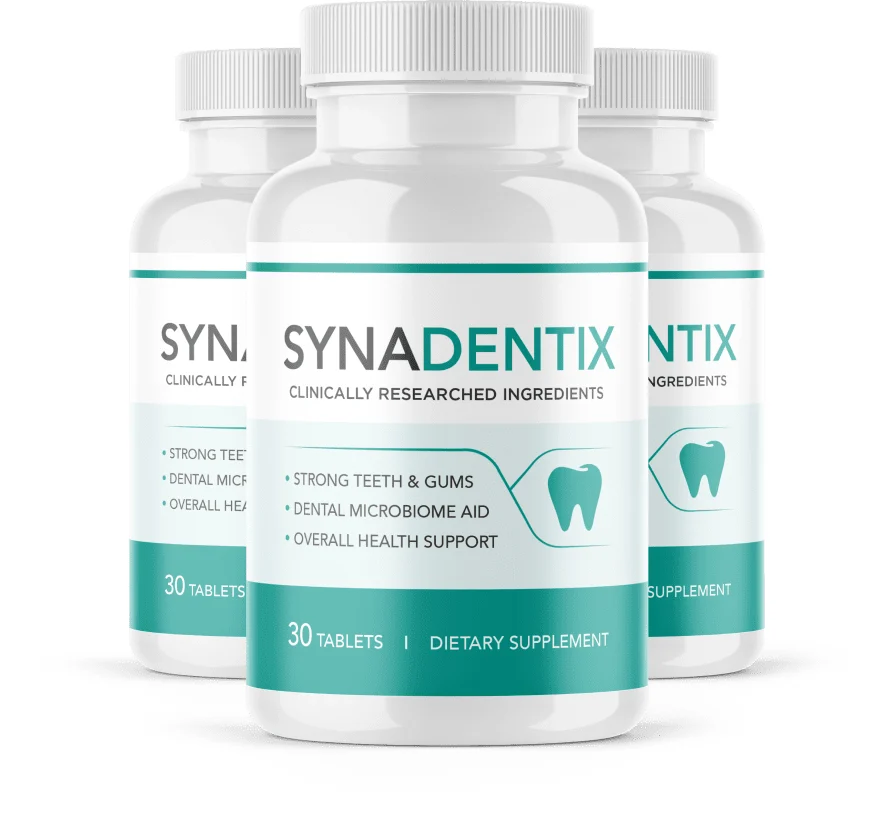
Synadentix at a Glance
| Form | Soft tablet held in the mouth to dissolve; 30 per bottle. Label: 1-2 a day after brushing. FAQ: 1 at bedtime |
| Core ingredients | 400 mg blend: guava, microcrystalline hydroxyapatite, lactoferrin, lysozyme, lactoperoxidase, glucose oxidase and 4 starch- and plaque-digesting enzymes |
| Made in | USA from US and imported ingredients, in a GMP, FDA-registered facility (label badges); distributor in Tallmadge, Ohio |
| Guarantee | 90 days, counted from the delivery date |
| Shipping (US) | $9.99 on 2 bottles; free on the 3- and 6-bottle packages (confirm at checkout) |
| Main caution | Lactoferrin and lactoperoxidase are usually milk-derived and lysozyme often comes from egg — check with support if you have food allergies |
Your mouth already has a built-in defense system. Saliva carries proteins and enzymes — lysozyme, lactoferrin and the lactoperoxidase system among them — that keep bacterial growth in check, plus calcium and phosphate that help repair the earliest stages of enamel damage. When saliva runs low, as it does at night or with many common medicines, cavities and bad breath tend to follow.
Synadentix is built around that idea. Instead of probiotics or herbs, it puts a set of saliva-like enzymes and proteins into a tablet together with hydroxyapatite, the mineral that enamel is made of, and asks you to let it dissolve slowly in the mouth. The short version of our assessment: the concept is grounded in real oral biology, the hydroxyapatite has decent research behind it in toothpaste form, but nothing has been published on this tablet, and some of the sales claims go much further than the science. The details are below.
→ See the Synadentix ingredient list on the official website
What Is Synadentix?
Synadentix is a dietary supplement sold online in bottles of 30 soft tablets. The front label lists three goals: "strong teeth and gums", "dental microbiome aid" and "overall health support". The official page describes it as a formula of enzymes, plants and minerals meant to support the oral microbiome and "healing saliva flow" while you sleep.
Unlike many products in this niche, the full Supplement Facts panel is visible in a label image on the official site. It shows a single 400 mg proprietary blend per tablet with ten components, and lists xylitol, microcrystalline cellulose, magnesium stearate and natural flavoring as the other ingredients. The label shows badges for GMP, manufacture in an FDA-registered facility and "Made in the USA using foreign and U.S. ingredients". The distributor is named as Synadentix, 285 Northeast Ave, Tallmadge, Ohio.
What the label does not show is the amount of any single ingredient. Ten components share 400 mg, so on average each would account for about 40 mg, although the real split is unknown.
How Synadentix Is Said to Work — and Where the Claims Overreach
The sales page makes three linked claims. First, that the real cause of tooth and gum problems is Porphyromonas gingivalis, a gum-disease bacterium that can enter the bloodstream and reach the heart and brain. Second, that the body can "repair teeth while you sleep" if saliva flow is restored. Third, that Synadentix's ingredients "go directly into your bloodstream" to cleanse the gums, detox the whole body and protect the brain.
The first claim has a real research base behind it. P. gingivalis is a well-known driver of periodontitis, and researchers are studying its possible links with heart disease and Alzheimer's disease — several of the papers on the brand's reference page are mouse or lab studies of exactly that. But "possible link in animal models" is very different from "the real problem behind all your teeth and gum problems". Most cavities are driven by acid-producing bacteria such as Streptococcus mutans and by sugar, and most gum disease starts with ordinary plaque that daily cleaning can control.
The second claim is half right. Saliva does supply minerals that help remineralize very early enamel lesions — white spots, not holes. Once a cavity has formed, it cannot grow back, by saliva or by any supplement. The third claim is the weakest: enzymes and proteins like lysozyme and lactoferrin are meant to act in the mouth, and if they reach the stomach they are largely digested. There is no evidence that this tablet detoxes the body or protects the brain, and we would not buy it on that basis.
Strip the overreach away and a reasonable, testable idea remains: a slowly dissolving tablet bathes the teeth for a short time in saliva-type proteins, plaque-softening enzymes, hydroxyapatite and xylitol. Whether that makes a visible difference has simply not been studied for this product.
Synadentix Ingredients: What Each One Does and the Evidence
The blend can be split into four groups: the protective saliva proteins, the enzymes that digest sugars and the plaque matrix, the mineral, and a fruit powder. Here they are one by one.
1. Lysozyme
Lysozyme is an enzyme found naturally in saliva, tears and egg white. It breaks down the cell walls of certain bacteria. It has been added to some toothpastes and dry-mouth products for decades, and laboratory research supports its antibacterial role. Clinical evidence that adding lysozyme changes cavity or gum outcomes is limited. Commercial lysozyme is most commonly produced from hen egg white; the label does not state the source, which matters for people with egg allergy.
2. Lactoferrin
Lactoferrin is an iron-binding protein present in saliva and in milk. By locking up iron it deprives some bacteria of a nutrient they need, and it has anti-inflammatory activity in lab studies. A 2012 review of lactoferrin in oral disease described it as promising for periodontitis while stressing that clinical trials were few and small. The sales page calls it "clinical lactoferrin"; the label gives no amount. It is normally sourced from cow's milk.
3. Lactoperoxidase
Lactoperoxidase is the centerpiece of what researchers call the lactoperoxidase system: together with hydrogen peroxide and thiocyanate (both present in saliva), it produces compounds that slow bacterial growth. A 2019 review in the International Journal of Molecular Sciences concluded that oral-care products using this system showed some benefit, particularly for dry mouth, though study quality was mixed. Like lactoferrin, it is usually derived from milk.
4. Glucose Oxidase
Glucose oxidase converts glucose into gluconic acid and hydrogen peroxide. In this formula its job is to feed the lactoperoxidase system with the hydrogen peroxide it needs — the same pairing used in some enzyme toothpastes. It is typically produced by fermentation with the fungus Aspergillus niger. On its own it has no direct evidence for dental benefits.
5. Dextranase
Dextranase breaks down dextran, one of the sticky sugar chains that bacteria use to glue plaque to teeth. Laboratory studies, including one listed on the brand's reference page, show it can loosen S. mutans biofilm. Human trials of dextranase in mouthwashes or gums have produced inconsistent results, and none has tested a swallowed or dissolved tablet.
6. Beta-Glucanase
Beta-glucanase cuts beta-glucan bonds found in parts of the plaque matrix and in fungal cell walls. A 2023 lab study in Caries Research tested enzyme combinations including beta-glucanase on biofilms grown from saliva, with partial effects. It is an interesting tool in the lab, not yet a proven one in people.
7. Amylase
Amylase is already the most abundant enzyme in human saliva; it starts digesting starch as you chew. Adding a little more is unlikely to change much, and there is a theoretical counterpoint: breaking starch down into sugars in the mouth can give acid-producing bacteria more fuel. In a 400 mg blend shared by ten ingredients, the practical effect either way is probably small.
8. Amyloglucosidase
Amyloglucosidase finishes the job amylase starts, turning starch fragments into glucose. Here it most likely supplies glucose for the glucose oxidase step described above. It has no independent research for oral health.
9. Microcrystalline Hydroxyapatite Complex
Hydroxyapatite is the calcium-phosphate mineral that makes up most of enamel, and it is the best-researched ingredient here. In toothpaste form, microcrystalline hydroxyapatite has performed close to fluoride in some trials: a German six-month study in orthodontic patients and a one-year Polish trial in young children found it was not inferior to fluoride toothpaste for preventing new early lesions. Those studies involved brushing a paste onto teeth twice a day. A tablet dissolved for 30 seconds delivers an unknown, likely much smaller amount, so the toothpaste results cannot be transferred to Synadentix. The FAQ's "NASA-grade" label is marketing language without a defined meaning.
10. Guava Fruit Powder
Guava leaves and fruit contain polyphenols, and guava-leaf extracts have shown antibacterial activity against mouth bacteria in lab studies. Most of that research uses leaf extract rather than fruit powder, and human data are scarce. In this formula guava probably contributes flavor and a modest amount of plant compounds.
Finally, xylitol appears among the other ingredients. It is not fermented by cavity bacteria, and a Cochrane review found low-quality evidence for a benefit of xylitol toothpaste in children. Its amount here is not stated, and one or two tablets a day is far less xylitol than the studied chewing-gum regimens.
Interested in a saliva-enzyme approach rather than probiotics? Check Synadentix's current packages on the official site.
Visit the Official Synadentix Website →The Two Sets of Directions
The official page and the bottle do not quite agree on how to take Synadentix:
- Official FAQ: let one tablet melt under your tongue, or chew it slowly, at night before bed.
- Bottle label: one soft tablet once or up to twice a day, ideally after brushing or using mouthwash; hold it in the mouth for 30 seconds to dissolve, then swallow.
A practical way to combine them: brush with fluoride toothpaste at night, then let one tablet dissolve slowly and do not rinse or eat afterwards. That gives the ingredients the longest contact with your teeth while saliva flow is at its lowest. Do not exceed two tablets a day, and store the bottle in a cool, dry place, because enzymes lose activity with heat and moisture.
Pros and Cons of Synadentix
Pros
- The approach mirrors the mouth's own defense proteins rather than relying on unrelated herbs or minerals
- Includes microcrystalline hydroxyapatite, an ingredient with real toothpaste trials behind it
- Dissolve-in-the-mouth format keeps the ingredients where they are supposed to act
- Full ingredient panel and other ingredients are visible on the label image; no sugar listed
- 90-day guarantee from delivery is longer than the usual 60 days in this category
Cons
- No amounts for any of the ten ingredients — only a 400 mg total
- No clinical study of the finished tablet
- Claims about bloodstream detox and brain protection are unsupported
- Likely milk- and egg-derived proteins, without an allergen statement on the page
- The FAQ and label give different directions
- Smallest order is two bottles, and the US shipping fee on it conflicts with the free-shipping table
Who Synadentix May Suit — and Who Should Skip It
Synadentix makes the most sense for adults who:
- find the saliva-protein concept appealing and want something that works in the mouth rather than the gut
- wake up with a dry mouth or morning breath and want to add a bedtime step to an already solid routine
- keep brushing with fluoride toothpaste and seeing a dentist, and treat the tablet as an extra
- value a longer refund window to make up their minds
Skip it, or speak with a professional first, if you:
- have a milk or egg allergy — confirm the protein sources with support before ordering
- are pregnant, breastfeeding or under 18; the label asks these groups to consult a physician
- take medication or manage a chronic illness, including conditions that cause dry mouth
- have pain, swelling, bleeding gums, a loose tooth or a visible cavity — those need diagnosis and treatment, not a lozenge
Allergies, Side Effects and Safety
No serious adverse effects have been publicly reported for Synadentix, and its components are widely used in foods, toothpastes and supplements. The main safety question is allergy. The US FDA lists milk and eggs among the major food allergens. Lactoferrin and lactoperoxidase are almost always isolated from cow's milk, and lysozyme is commonly made from egg white. The label does not include a "contains" statement, so anyone with these allergies should get written confirmation of the sources first.
Other points: xylitol can loosen stools in some people and is dangerous for dogs, so store the bottle out of a pet's reach. Enzyme products occasionally cause mild mouth or throat irritation; stop if that happens. If you have chronic dry mouth, the National Institute of Dental and Craniofacial Research notes that it is often a side effect of medicines or a sign of conditions such as Sjögren's syndrome — worth raising with your doctor rather than masking.
Synadentix Price and Packages
Three packages appear on the official order page. Per-bottle prices are displayed as images, so check the total on the checkout screen:
| Package | What the official order page shows |
|---|---|
| 2 bottles (60-day supply) | $79 per bottle + $9.99 shipping |
| 2 + 1 bottles (90-day supply) | $69 per bottle, free US shipping |
| 3 + 3 bottles (180-day supply) | $49 per bottle, free US shipping, 3 digital bonus guides |
| US delivery | About 5-7 working days; tracking email within 60 hours |
| Canada, UK, Ireland, Australia, NZ | $15.95, about 10-15 working days |
| Guarantee | 90 days from the delivery date |
Based on those per-bottle figures, the totals work out to about $158 plus shipping, $207 and $294. The separate shipping policy page says US delivery is free, while the two-bottle package shows a $9.99 charge — confirm at checkout. The FAQ states there is no subscription or automatic rebilling. The three bonuses with the six-bottle package are e-books about breath, mouth breathing and a gum-massage routine; they are extras, not part of the product.
What We Saw on the Official Synadentix Order Page (October 13, 2026)
On October 13, 2026 we opened the official order page ourselves and followed the checkout up to the payment step, without placing an order, to record exactly what a buyer sees. The screenshots below are unedited crops from that visit.
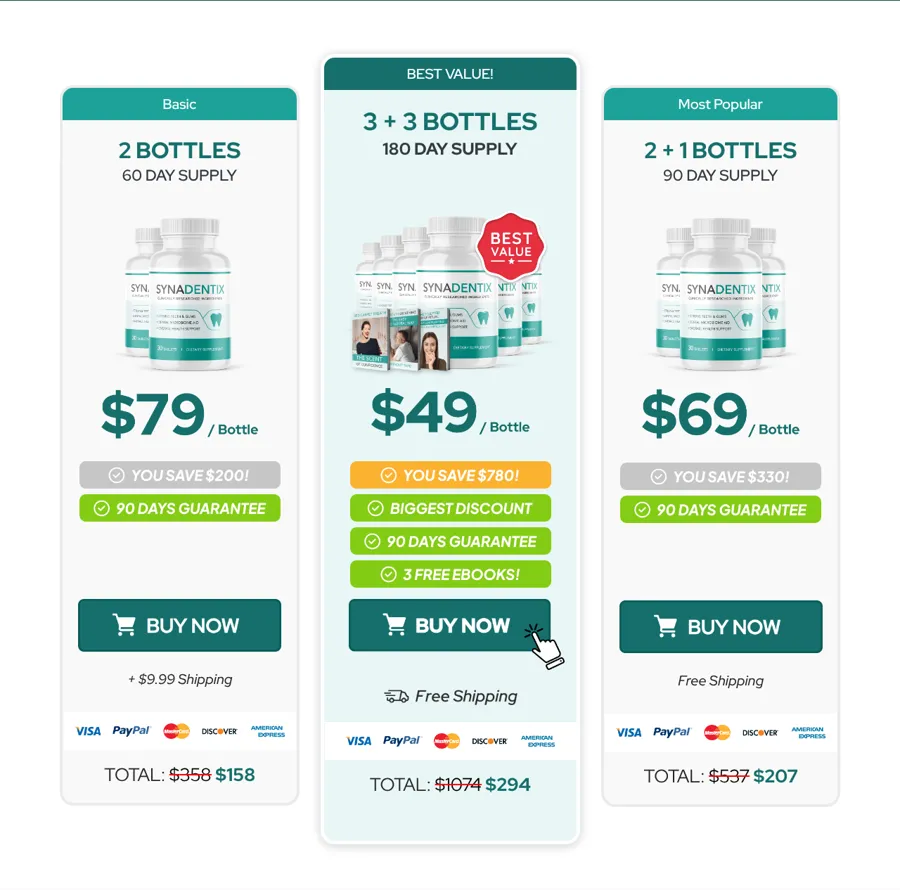
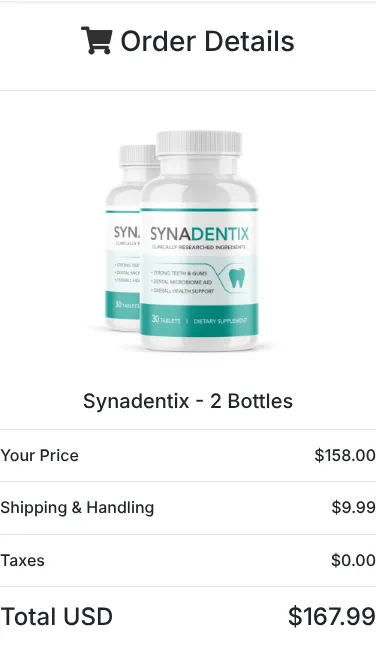
- At the secure checkout the bundles came to: Synadentix - 2 Bottles: $158.00 plus $9.99 shipping, $167.99 total; Synadentix - 2 + 1 Bottles: $207.00 with free shipping; Synadentix - 3 + 3 Bottles: $294.00 with free shipping. Tax showed as $0.00.
- Contact address listed on the official site: contact@synadentix-product.com.
The 90-Day Guarantee in Practice
The refund page gives you 90 days starting on the day your order is delivered. To use it, you email the product support address with "Refund Request" in the subject line, then mail back every bottle — full, opened or empty — with the packing slip and a note carrying your name, email and order number. The return address on the policy page is in Tallmadge, Ohio. Return postage is on you, and after processing the refund can take 5 to 10 days to show up on your card.
A simple plan keeps you inside the window: note your delivery date from the tracking email; jot down your baseline (morning breath, sensitivity, what your hygienist said last time); use the tablet consistently; and decide by about day 75 so the parcel reaches the returns address in time. The policy page itself recommends three months of use before deciding, which equals the entire window — another reason not to leave it to the last week.
→ Check today's Synadentix price and the 90-day terms on the official website
Where to Buy Synadentix
Synadentix is sold through its official website, which hands you over to the official order page to pay. Enzymes and proteins are sensitive to heat and storage, so listings on marketplaces or unknown shops carry an extra risk beyond counterfeits, and they are not covered by the 90-day refund. Buy from the official page if you want the guarantee to apply.
Synadentix vs. a Hydroxyapatite or Enzyme Toothpaste
If one ingredient drew you to Synadentix, it is worth knowing the simpler alternatives. Hydroxyapatite toothpastes put the mineral directly on the teeth twice a day, which is how it was studied; some are fluoride-free, so ask your dentist whether that suits your cavity risk. Enzyme toothpastes and dry-mouth gels with lysozyme, lactoferrin and lactoperoxidase have been sold for years and act in the mouth by design. Synadentix's advantage is convenience — one tablet combining both ideas at bedtime — and its disadvantage is that nobody can say how much of each ingredient you get.
Final Verdict
Of the many oral health supplements sold online, Synadentix has one of the more scientifically coherent concepts. Saliva's protective proteins are real, the lactoperoxidase-plus-glucose-oxidase pairing makes sense, and hydroxyapatite has respectable toothpaste data. The format — a tablet dissolved in the mouth after brushing — fits that concept better than a capsule would.
The gaps are equally clear: undisclosed doses, no trial of the product, possible milk and egg allergens without a clear statement, and a sales pitch that jumps from oral bacteria to brain health and whole-body detox. If you are a healthy adult without these allergies, already brushing with fluoride and seeing your dentist, Synadentix is a reasonable experiment to run for two to three months under its 90-day guarantee. Expect, at most, support for a good routine; it will not reverse cavities or treat gum disease.
Frequently Asked Questions (FAQs)
When is the best time to take Synadentix?
The official FAQ recommends bedtime. The label says once or twice a day after brushing. A tablet dissolved slowly after your evening brushing satisfies both.
Is Synadentix safe with a milk or egg allergy?
Not without checking. Lactoferrin and lactoperoxidase are usually made from milk, and lysozyme is often made from egg white. The label has no allergen statement, so ask support for written confirmation.
Can Synadentix rebuild enamel or fill cavities?
No. Saliva and hydroxyapatite can help remineralize very early white-spot lesions, but a cavity that has formed needs a dentist. Synadentix itself has not been studied.
How much hydroxyapatite is in each tablet?
The amount is not disclosed. The label shows only a 400 mg total for a blend of ten ingredients.
Does Synadentix contain sugar?
No sugar is listed. The other ingredients are xylitol, microcrystalline cellulose, magnesium stearate and natural flavoring.
How long is the Synadentix refund window?
90 days from delivery. You must return all bottles, even empty ones, with the packing slip, and pay the return postage.
Curious whether the enzyme approach is worth a try? See current Synadentix packages and the 90-day terms on the official site.
Visit the Official Synadentix Website →References
- Magacz M, et al. The significance of lactoperoxidase system in oral health: application and efficacy in oral hygiene products. Int J Mol Sci. 2019;20(6):1443.
- Berlutti F, et al. Lactoferrin and oral diseases: current status and perspective in periodontitis. Ann Stomatol (Roma). 2011;2(3-4):10-18.
- Schlagenhauf U, et al. Impact of a non-fluoridated microcrystalline hydroxyapatite dentifrice on enamel caries progression in highly caries-susceptible orthodontic patients: a randomized, controlled 6-month trial. J Investig Clin Dent. 2019;10(2):e12399.
- Paszynska E, et al. Impact of a toothpaste with microcrystalline hydroxyapatite on the occurrence of early childhood caries: a 1-year randomized clinical trial. Sci Rep. 2021;11:2650.
- Pepla E, et al. Nano-hydroxyapatite and its applications in preventive, restorative and regenerative dentistry: a review of literature. Ann Stomatol (Roma). 2014;5(3):108-114.
- Rikvold PD, et al. The effect of enzymatic treatment with mutanase, beta-glucanase, and DNase on a saliva-derived biofilm model. Caries Res. 2024;58(2):72-80.
- Riley P, et al. Xylitol-containing products for preventing dental caries in children and adults. Cochrane Database Syst Rev. 2015;(3):CD010743.
- National Institute of Dental and Craniofacial Research (NIH). Dry Mouth.
- US Food and Drug Administration. Food Allergies: What You Need to Know.
This review is for general information only and is not medical advice. Product details (ingredients, prices, guarantee) come from the official Synadentix pages as checked in October 2026; they can change, so confirm them at checkout. Talk to your doctor before starting any supplement, especially if you take prescription medication or have a health condition.